.png)
The biggest software mistake in additive manufacturing is not choosing the wrong system, it’s asking the right system to do the wrong job.
ERP is good at business truth (orders, inventory, purchasing, finance, commercial records). MES is good at execution truth (jobs, routing, scheduling, work instructions, status, production flow). Traditional QMS is good at procedural truth (documents, approvals, deviations, CAPA, controlled processes)
But AM production creates another kind of truth - quality evidence truth.
This is the layer where powder condition, build context, machine behaviour, post-processing, inspection data, test results, parameter history, and qualification evidence need to connect around the part. Not as files attached afterwards. Not as exports rebuilt for an audit. Not as “someone knows where that report is saved.”
Connected at part level.
That distinction matters because AM quality is not linear. A final inspection result may be shaped by powder reuse, build orientation, parameter set, machine condition, heat treatment, surface finishing, CT results, tensile data, and customer-specific acceptance criteria. If those data points are spread across different tools and folders, the software stack may look mature on paper while the evidence chain remains fragile in practice.
For CTOs, manufacturing IT teams and integration partners, this is where the architecture question becomes important. Should MES own AM quality evidence?
Sometimes MES can manage workflow and collect useful production data, but asking MES to become the full AM quality evidence layer often creates complexity. It may track the job, but not model the full powder-to-part quality chain deeply enough for qualification, SPC, root-cause analysis, and audit-ready reporting.
Should ERP own it? No. ERP should not be forced into production-quality detail. It needs clean commercial and operational data, not every AM process signal.
Should a classical QMS own it? Only partly. A traditional QMS can manage procedures and quality governance. But AM needs more than document control. It needs connected process evidence.
This is why a production-level AM quality management software belongs under ERP and alongside MES.
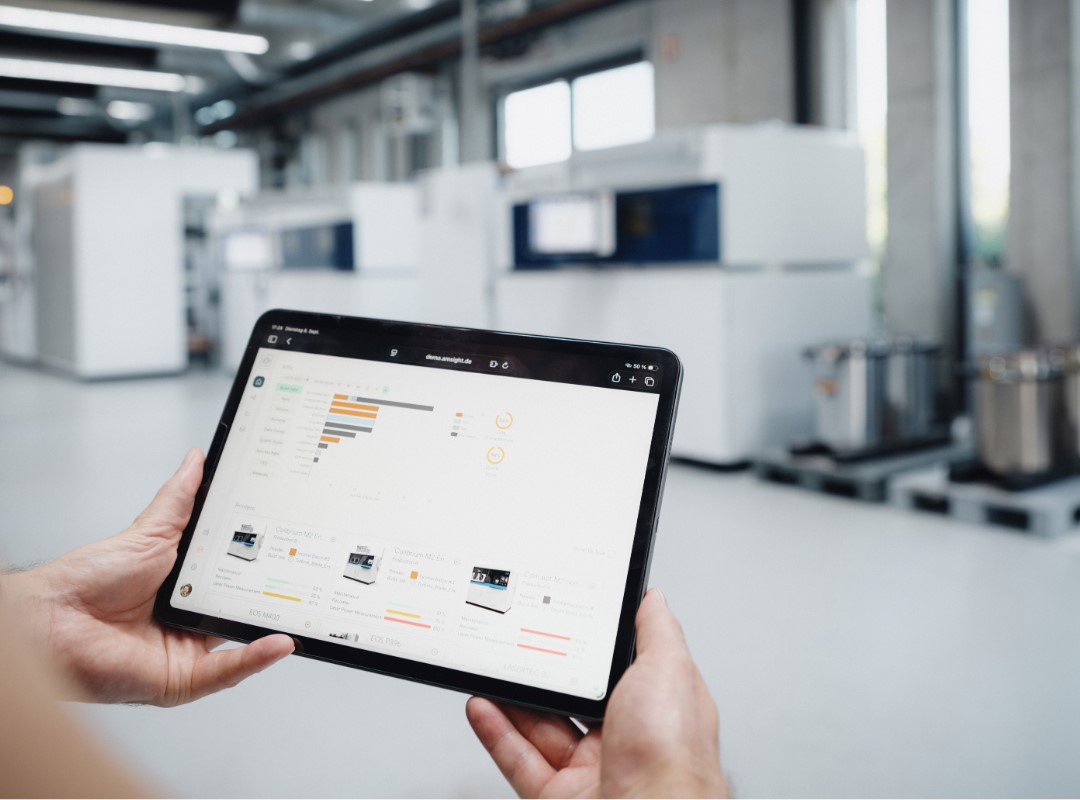
Its role is specific — connect the quality-relevant evidence that proves what happened, supports decisions, and makes production quality repeatable. In amsight, that means linking powder, process, machine, post-processing, and inspection data at part level, so traceability, reporting, SPC, and root-cause analysis are built on structured evidence rather than manual reconstruction.
A future-proof stack does not try to make every system larger. It makes every system clearer.
- ERP owns the commercial record.
- MES owns execution flow.
- QMS owns procedures and governance.
- amsight owns the AM-specific quality evidence chain.
The value of that architecture becomes visible in Process & Machine Qualification Qualification where vague software boundaries quickly fail. It requires more than storing documents, it requires specifications, machine data, specimen data, acceptance criteria, SPC, trend analysis, capability evidence and repeatable reporting. It needs a system that can prove not just that one part passed, but that the process and machine remain under control.
That is why Process & Machine Qualification is a useful starting point for CTOs and IT teams evaluating AM quality architecture. It exposes whether the stack can support production reality. Can it connect evidence automatically? Can it compare builds and machines? Can it support IQ/OQ/PQ logic? Can it generate reports without spreadsheet assembly? Can SPC reveal drift before quality becomes a customer issue?
These are not “nice to have” questions. They are the questions that decide whether AM can scale into regulated, repeatable production.
A future-proof AM software stack is not built around more dashboards, it’s built around clean responsibility, business truth, execution truth, procedural truth, and quality evidence truth.
When these layers are clear, AM teams spend less time chasing data and more time proving, controlling and improving production quality.
Explore the related use cases Process & Machine Qualification as well as Custom Reports & Analytics.
Related articles
.png)
Blog Post
Process-Centred vs Part-Centred Thinking in Regulated Additive Manufacturing
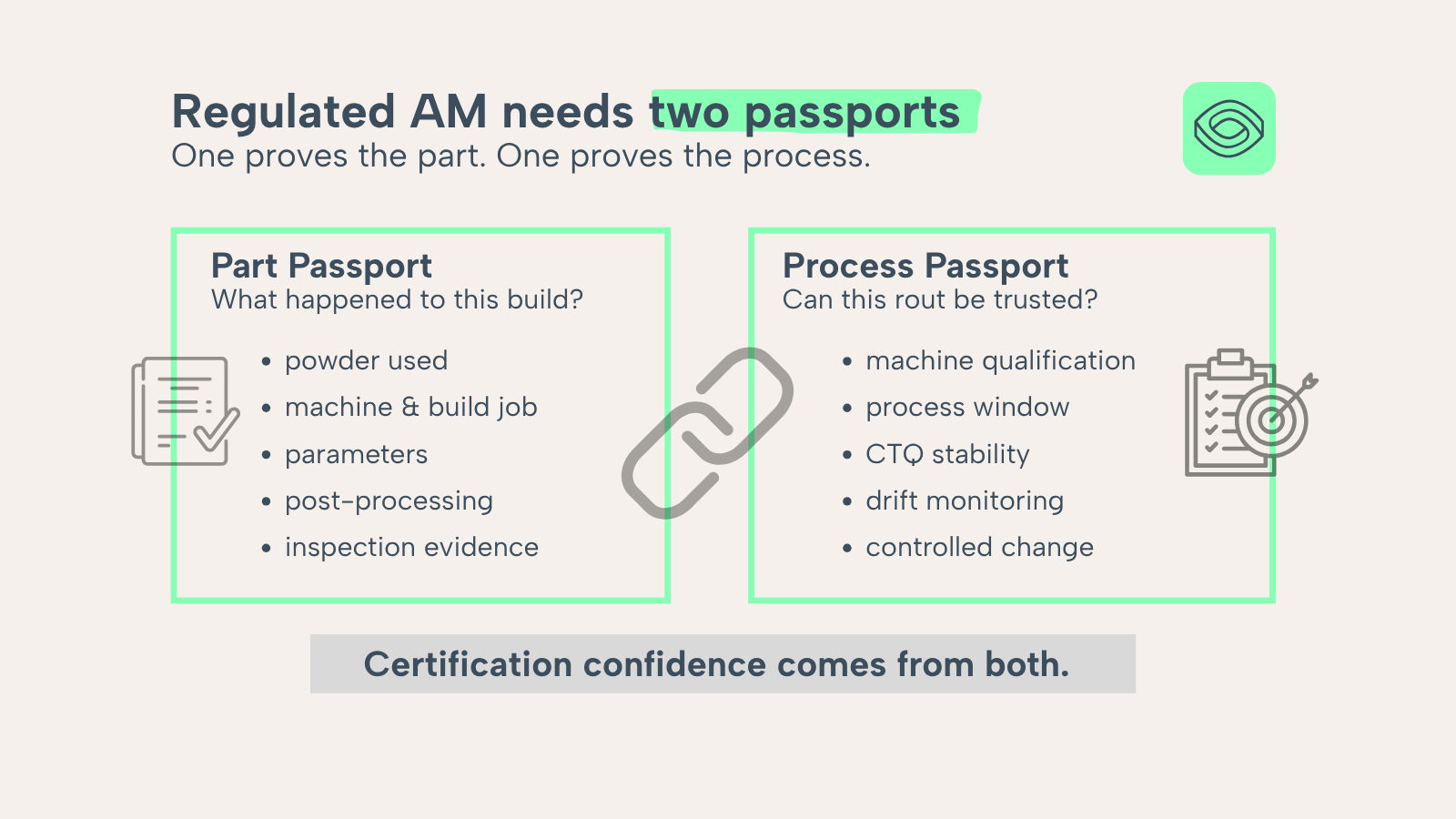
Regulated AM customers are not only asking whether a part conforms. They want to know whether the process behind it is stable, repeatable and controlled. This article explains why mature AM suppliers need both a part passport and a process passport.
Jul 28, 2026
Let's Talk About Your AM Production
Book a call and we'll discuss your process, requirements as we share our findings and walk through why we built amsight.