.png)
In industrial metal AM, “stable” is one of those words everyone uses and too few organisations define properly. A production manager may say a process is stable because most builds pass inspection. A quality manager may say it is stable because the last audit was successful. An engineer may say it is stable because the parameter set has not changed. A customer may say it is stable only when the evidence proves repeatability over time.
The customer is closest to the truth.
A stable AM process is not a process that occasionally produces good parts. It is a process that behaves within known limits, shows predictable variation, and gives the production team early warning before quality escapes become scrap, rework, or customer risk.
That distinction matters because many AM operations still confuse inspection success with process stability. Inspection tells you whether the part met requirements. Stability tells you whether the process is likely to keep meeting them. For Ops and Production leaders, that is the difference between firefighting and control.
Stability is a Pattern, Not a Pass Mark
The most misleading build in AM is the one that passes inspection but hides drift. A CT result may be acceptable, a tensile result may still clear the limit, and the dimensional report may look fine. But if porosity is trending upward, elongation is moving toward the lower specification limit, or surface roughness is becoming less consistent, the process is already speaking. The question is whether anyone is listening.
This is where Statistical Process Control (SPC) becomes valuable. SPC does not wait for failure. It looks at behaviour over time. It helps teams distinguish normal process variation from signals that something has changed.
That is crucial in metal AM because variation rarely comes from one dramatic event. More often, it builds quietly. Powder condition changes through reuse. Machines drift. Maintenance events alter behaviour. Environmental conditions move. Build layouts change thermal history. Post-processing introduces its own variation. Each factor may be small, but in combination they can push the process out of stability.
A stable process is one where these factors are understood, monitored, and kept within defined windows.
What Does “Normal” Look Like?
Every AM shop floor needs a definition of normal. Normal is not perfection, it’s the expected variation of a controlled process. The key is to know the difference between variation you can live with and variation that demands action.
That means looking beyond individual results and measuring the pattern — how CTQs behave across builds, machines, powder states and time. For example, if porosity remains within specification but starts to cluster differently after a machine maintenance event, that matters. If one printer consistently trends closer to a limit than the rest of the fleet, that matters. If a powder reuse cycle correlates with a gradual shift in mechanical properties, that matters.
These are not academic observations. They are production signals. If those signals are visible early, teams can respond before the cost escalates. If they are hidden in spreadsheets and reports, the first clear signal may be scrap.
Root Cause Should Not Start with Reconstruction
When a process is unstable, the first production question is simple, what changed? Too often, answering that question takes longer than it should. Someone checks machine logs. Someone else searches powder records. A third person looks for inspection reports. Maintenance history may sit somewhere else. The team finally assembles the story, but by then the investigation has already consumed time, capacity, and confidence.
That is not root-cause analysis. That is data archaeology. A stable AM operation needs a different rhythm. When a signal appears, the team should be able to move quickly from “we see drift” to “here are the most likely contributors.” Was the issue connected to a machine? A powder batch? A parameter revision? A maintenance event? A post-processing step? A particular build layout? The faster that link can be made, the faster production can recover.
Why Custom Reports & Analytics Matters
This is where amsight’s Custom Reports & Analytics use case becomes strategically important.
Reports are often treated as the output of quality management, something prepared for customers, audits, or internal reviews. In a stable AM process, reports should also act as the operating mirror of production. They should show whether the process is tightening, drifting, repeating, or deteriorating.
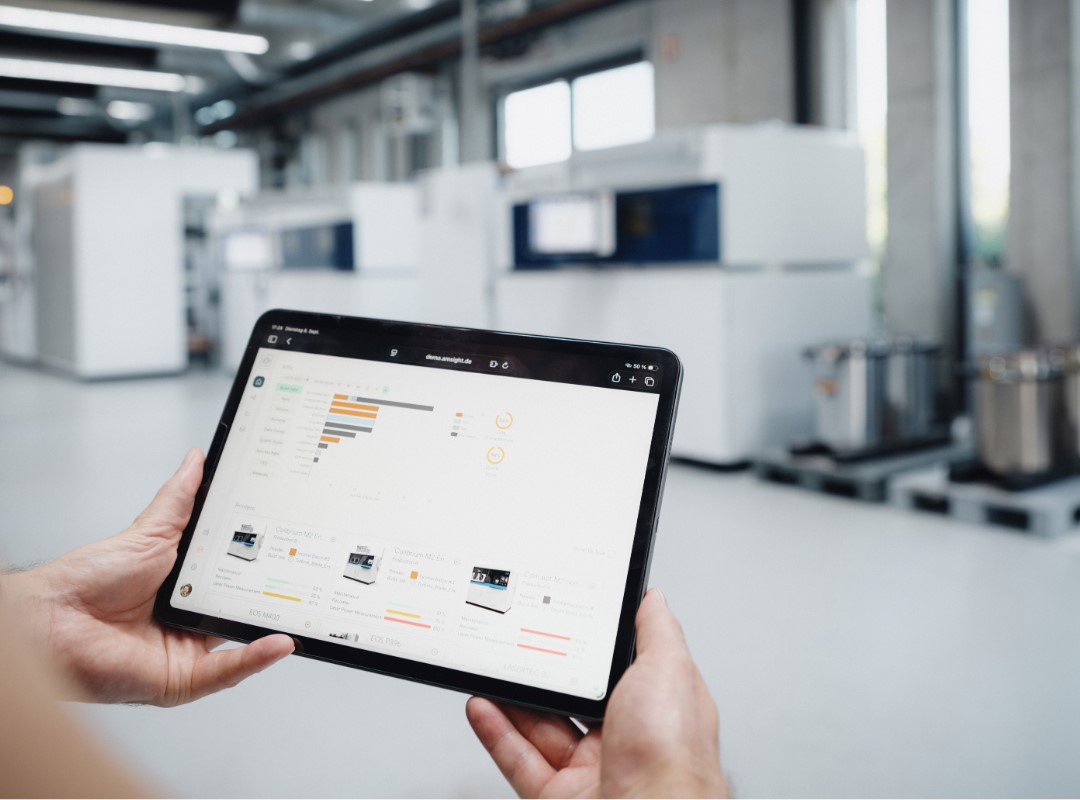
The novel way to think about Custom Reports & Analytics is as a stability lens. It allows AM teams to turn connected production data into views that production leaders can actually act on (capability trends, control behaviour, quality performance by machine, inspection outcomes by powder state, deviations following machine events, and repeated patterns that would otherwise stay buried).
This matters because stability is not created by one dashboard. It is created by repeatable visibility. Teams need to see the same evidence, in the same structure, without rebuilding it every time.
The Payoff is Fewer Surprises
For production leaders, the value of process stability is not theoretical. It shows up in three places — lower scrap, less rework, and shorter investigations. When the process is stable, inspection becomes confirmation rather than rescue. When variation is visible, corrective action becomes earlier and more precise. When evidence is connected, root cause becomes faster and less dependent on individual memory.
This is how AM matures as a production technology. Not by pretending variation does not exist, but by measuring it honestly and controlling it systematically. A stable AM process is not quiet because nothing happens. It is quiet because the process is understood. And in industrial metal AM, that may be the most valuable production advantage of all.
Related articles
.png)
Blog Post
Architecting an Additive Manufacturing Software Stack
amsight doesn’t replace your MES or ERP - it fills the critical gap between them by owning the AM-specific quality evidence chain, so you stop assembling audit packs from spreadsheets and start proving part-level traceability, SPC, and process stability from powder to final inspection.
Aug 31, 2026
.png)
Let's Talk About Your AM Production
Book a call and we'll discuss your process, requirements as we share our findings and walk through why we built amsight.