In regulated industries, quality isn’t a slogan, it’s a burden of proof.
Space, aerospace, defence, and semiconductor supply chains don’t just want good parts. They want repeatable evidence that those parts were produced under controlled conditions, with traceability that holds up under scrutiny. And that’s where many additive manufacturing operations quietly struggle. Not because they don’t have data, but because their “quality record” is often a storage problem, not a system.
Stored evidence isn't audit-ready evidence
Most AM teams can point to the ingredients of an audit pack:
- Powder certificates and batch numbers
- Build logs and parameter sets
- Post-processing records (heat treatment, machining, surface finishing)
- Inspection reports, CT scans, test coupons and results
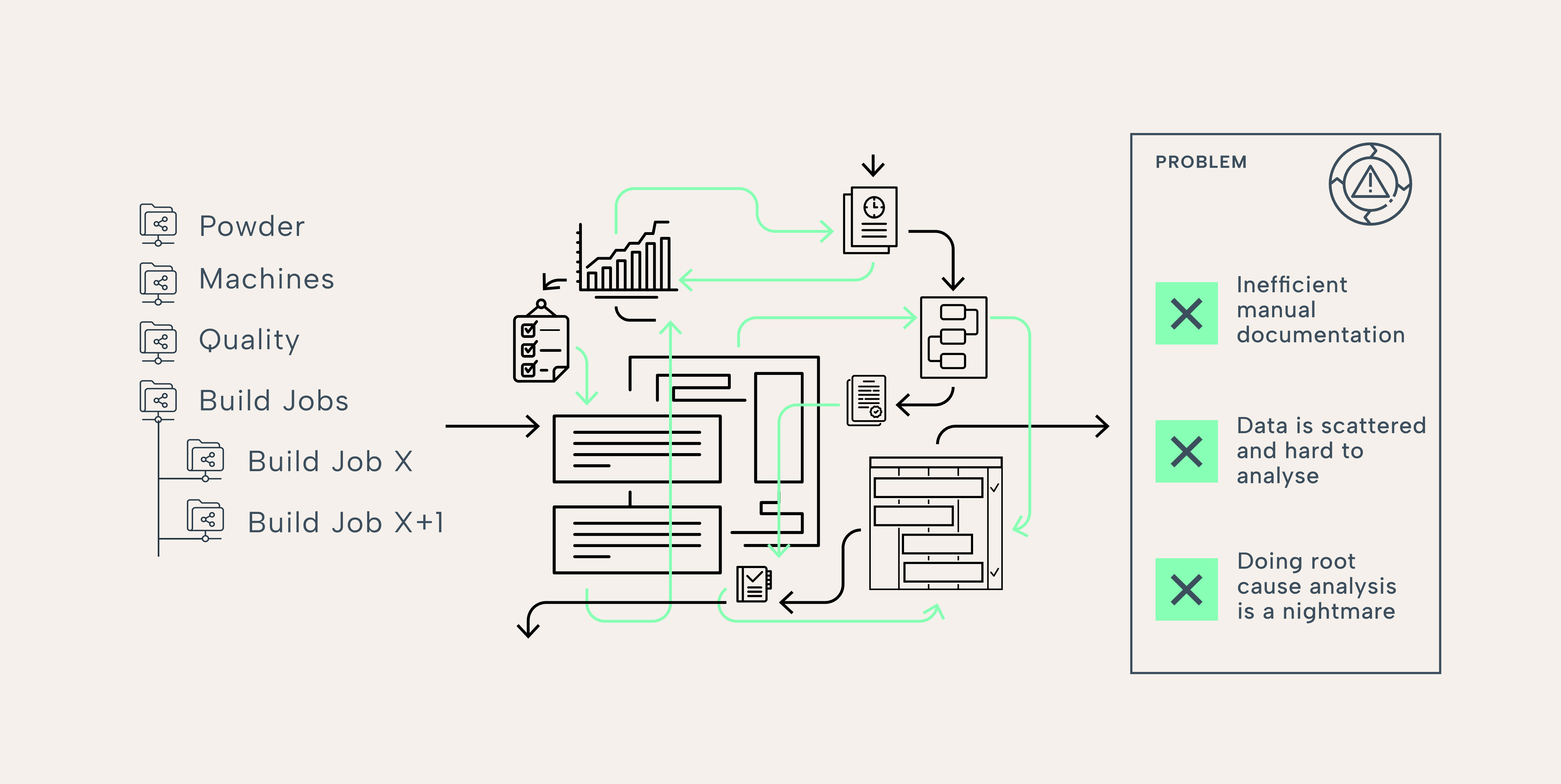
But when an auditor asks a question that crosses those boundaries such as “Show me the full story of this part and what changed compared to the last accepted build,” the response is often manual reconstruction.
People search folders. Copy-paste into Excel. Build a one-off report. Pull screenshots from machines. Chase down a missing PDF. The organisation can answer, but it takes days, and the risk of inconsistency or human error is high.
That’s not evidence. That’s effort.
What auditors really reward is coherence, not volume
A common misconception is that audit readiness is about having “more documentation”. In reality, auditors reward:
- Coherence - a single, consistent story per part
- Traceability - clear links between material, process, post-processing and test evidence
- Change visibility - who changed what, when, and why
- Repeatability - the ability to generate the same evidence pack every time
In other words, a digital data trail that behaves like a system of record not a filing cabinet.
The digital data trail - Design principles
A digital audit trail for AM must be built around part-level truth. Four principles matter:
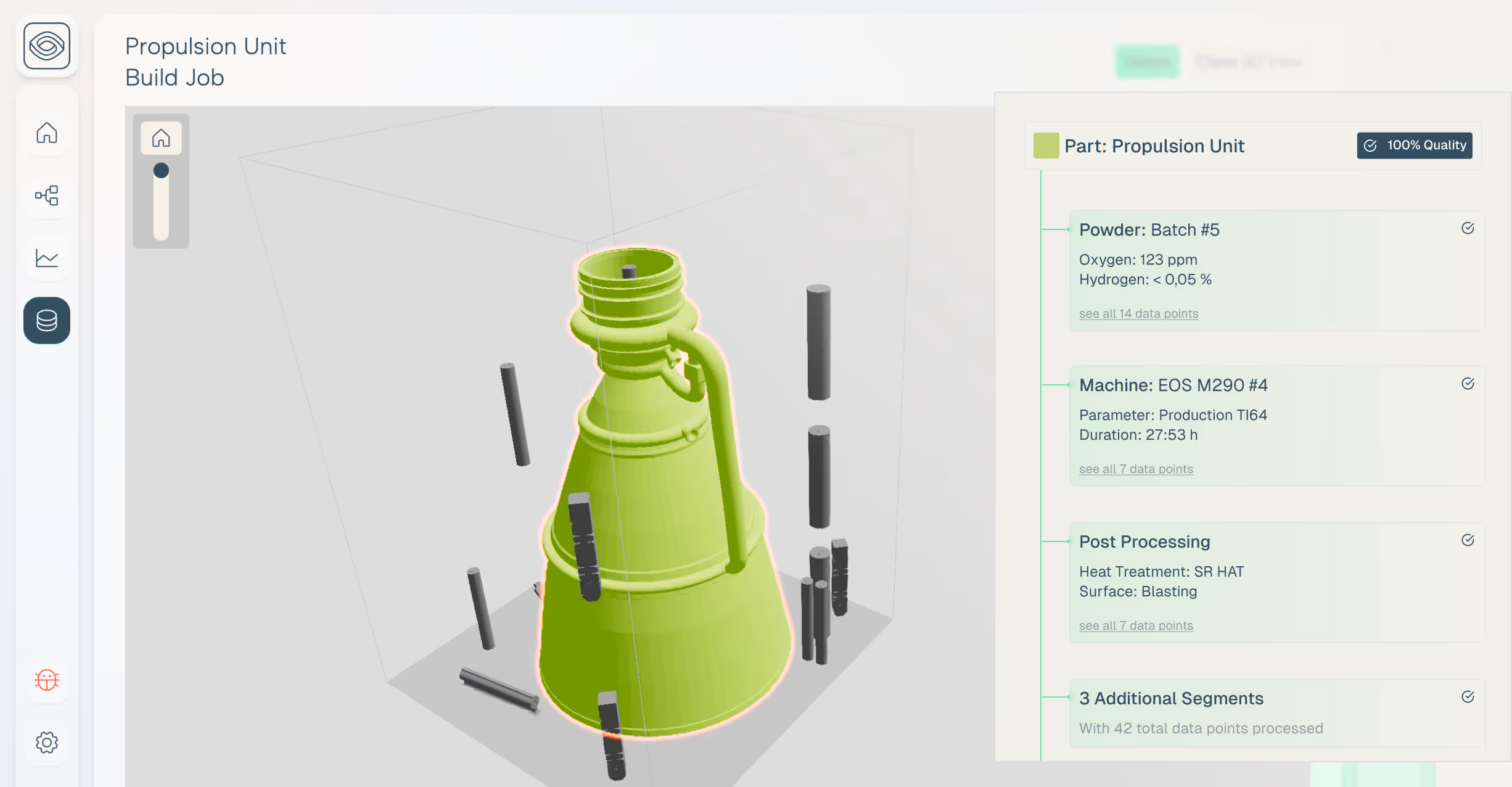
- Part-level anchoring: Every relevant record must attach to the part: powder genealogy, build job, parameter set, machine events, post-processing route, inspection results. If those links don’t exist, “traceability” is just a promise.
- Process-chain completeness: Audits don’t stop at the printer. A trail that only captures build data still leaves gaps in post-processing and inspection, exactly where many safety-critical issues appear.
- Standardised reporting: The same question should produce the same answer- in the same way. That requires templates and structured fields, not bespoke PowerPoints created under pressure.
- Evidence you can query: Audit readiness is also about speed. When a customer asks, “Which parts used powder lot X?” the answer should be a filter, not a forensic project.
From audit archaeology to "Prove part conformity"
This is why we frame the problem as proving part conformity, not “storing documents”.
In amsight, proving part conformity is simple: turn disparate quality evidence into a part-level story that can be generated consistently and quickly, so QA teams spend less time assembling packs and more time controlling processes.
A provocative self-check
If you want to assess your real audit readiness, try this exercise: Pick one delivered part. Now answer these in under 2 minutes:
- Powder lot, reuse/mix history, and where it’s recorded
- Build parameters and machine state for that job
- Post-processing route and evidence
- Inspection and test evidence
- What changed since the last accepted build
If that feels unrealistic, you’re not alone, but you’ve found the gap.
The future of regulated AM isn’t more paperwork. It’s better structure, a digital data trail that survives scrutiny because it’s designed to.
Related articles
.png)
Blog Post
Architecting an Additive Manufacturing Software Stack
amsight doesn’t replace your MES or ERP - it fills the critical gap between them by owning the AM-specific quality evidence chain, so you stop assembling audit packs from spreadsheets and start proving part-level traceability, SPC, and process stability from powder to final inspection.
Aug 31, 2026
.png)
Blog Post
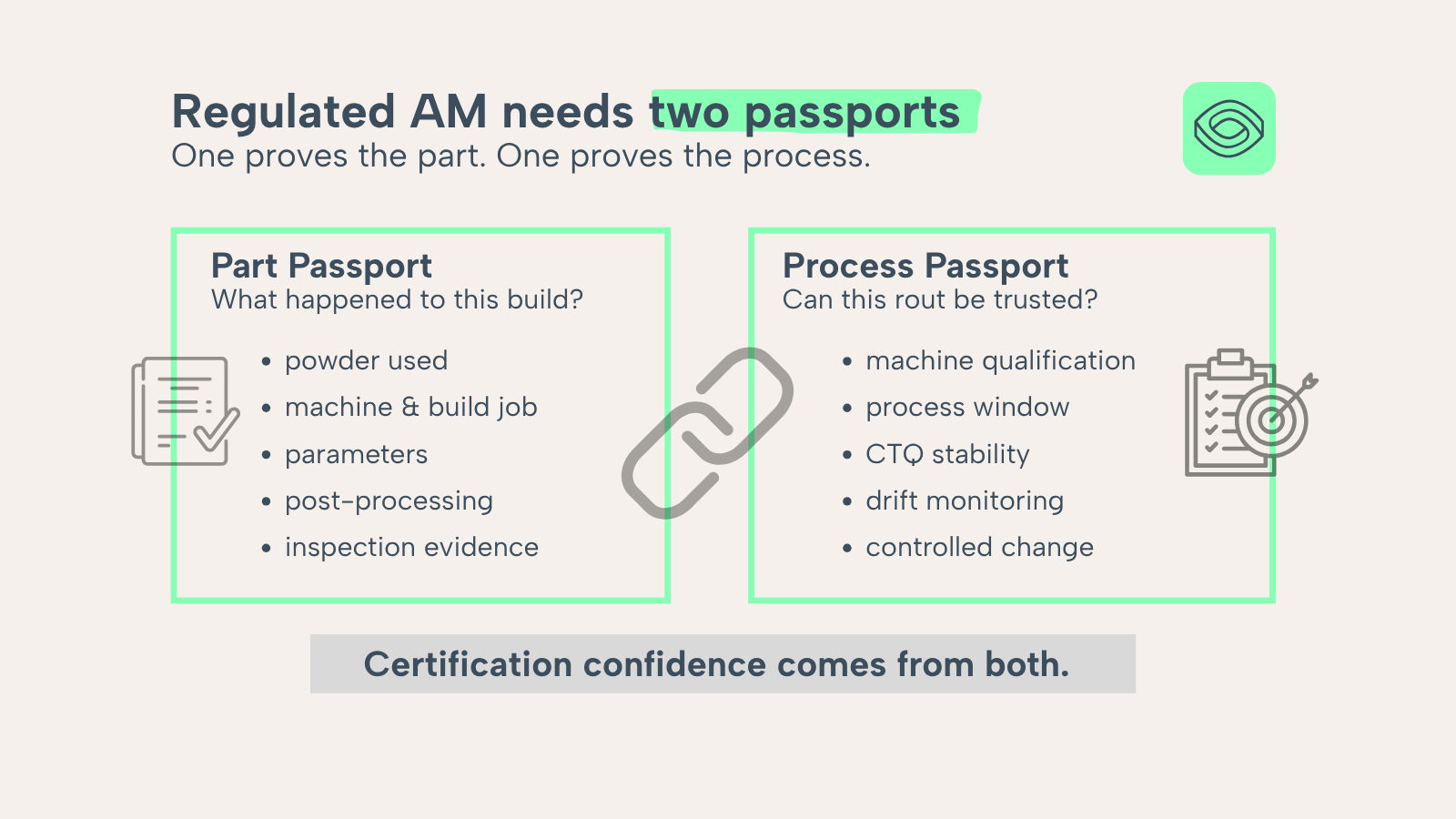
Process-Centred vs Part-Centred Thinking in Regulated Additive Manufacturing
Regulated AM customers are not only asking whether a part conforms. They want to know whether the process behind it is stable, repeatable and controlled. This article explains why mature AM suppliers need both a part passport and a process passport.
Jul 28, 2026
Let's Talk About Your AM Production
Book a call and we'll discuss your process, requirements as we share our findings and walk through why we built amsight.