Most AM quality systems fail not because the process suddenly became incapable, but because the evidence chain did.
A spreadsheet-driven quality workflow can look “fine” for months, builds are running, parts are shipping, reports are being produced. Then you hit scale (more machines, more projects, more revisions, more customer scrutiny) and the cracks appear. Not as a dramatic breakdown, but as a slow erosion of trust.
Here are the risks that spreadsheet-based quality documentation introduces in powder-bed AM, the ones QA managers and Heads of AM feel, even when nobody says them out loud.
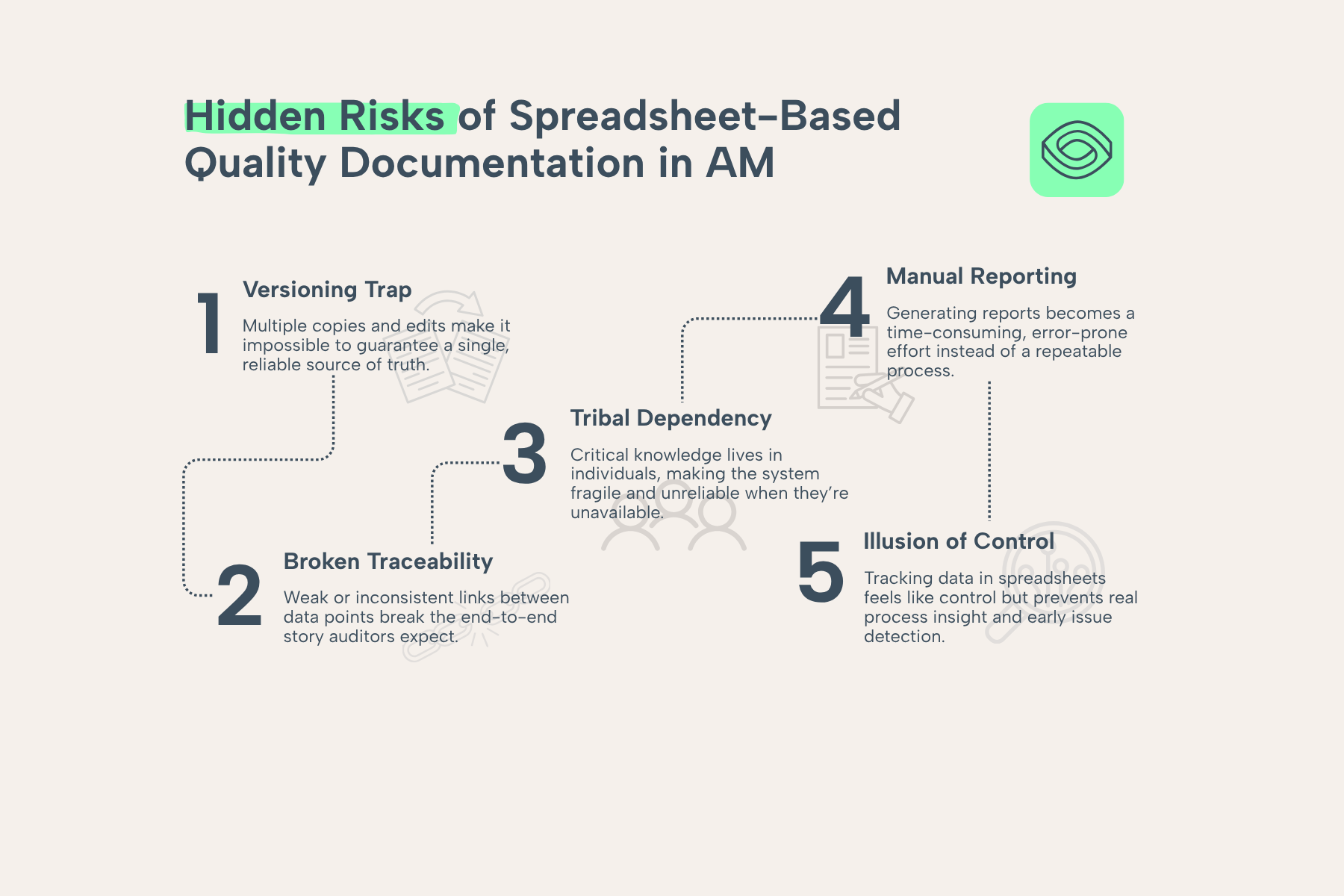
- The versioning trap: Spreadsheets create a fragile form of truth, the latest file is “the truth” until it isn’t. One duplicate copy in someone’s downloads folder. One late-night edit. One “final_v7_reallyfinal.xlsx”. You can lock sheets and enforce naming conventions, but as soon as multiple people and sites collaborate, version drift becomes inevitable. In regulated environments, version ambiguity is not a minor inconvenience, it’s a compliance risk.
- The broken-link problem: AM quality evidence is relational. Powder batch → build job → parameter set → post-processing route → inspection evidence. Spreadsheets don’t enforce relationships, they simulate them. A part number changes. A build ID is mistyped. A powder lot is blended and logged inconsistently. Suddenly the chain is broken, and you won’t notice until someone asks a question that crosses the chain. Auditors don’t just want files. They want a coherent part-level story.
- The “tribal knowledge” dependency: Every spreadsheet system has a human operating system underneath, the person who knows which column matters, how to interpret the notes field, which macro generates the report, and where the missing data lives. That’s fine until the person changes role, goes off sick, or simply isn’t available when a customer query lands. A quality system that depends on individuals is not a system, it’s a hero narrative.
- The “report as emergency project” pattern: When quality evidence lives in spreadsheets, reporting becomes manual. Each customer needs a slightly different format. Each programme needs its own template. Each audit triggers a new round of copy-paste, screenshots, and manual collation. The organisation spends real engineering time assembling documentation rather than stabilising the process. That’s why “we can produce a report” is not the same as “we are audit-ready.”
- The false sense of control: Spreadsheets often make teams feel in control because they can “track everything”. But tracking isn’t control. Control means you can detect drift early, run SPC over time, and tie deviations back to specific causes without days of manual reconciliation. Spreadsheet-based workflows make those disciplines so painful that organisations default to what’s easier, so inspect more, CT more, test more. Costs rise, cycle times grow, and scrap reduction stalls.
A digital quality backbone
The goal isn’t to get rid of Excel. Excel is excellent for local analysis. The goal is to stop using it as the backbone of traceability and conformity evidence.
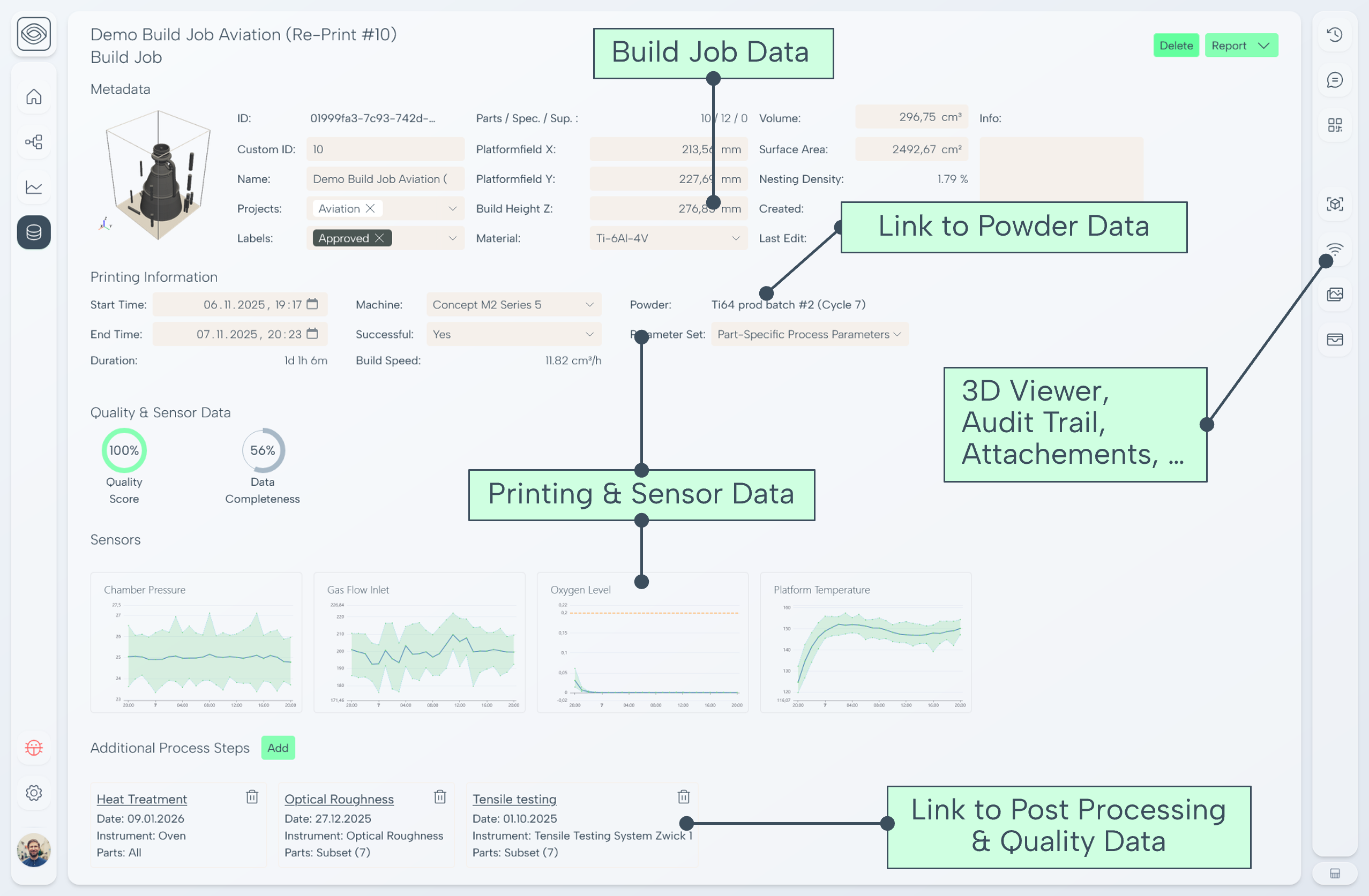
A digital quality backbone links powder, process, post-processing and inspection data into a part-level record that can be queried, analysed, and reported consistently. It turns “prove it” from a manual scramble into a repeatable output, and it creates the foundation for real process control.
That’s the thinking behind amsight’s Traceable Production Data use case, capturing structured data across the AM chain and generating traceability and documentation that stands up to regulated expectations.
A simple self-check
If you want to measure your exposure, ask whether you can answer these questions in under 2 minutes, for any shipped part?
- powder history and mix/reuse state
- build parameters and machine sensor data
- post-processing route evidence
- inspection results and conformity record
If the answer involves “find the spreadsheet”, you’ve found the risk. And once you see it, it’s hard to unsee. The biggest threat to production AM quality is often not the process, it’s the way the evidence is managed.
Related articles
.png)
Blog Post
Architecting an Additive Manufacturing Software Stack
amsight doesn’t replace your MES or ERP - it fills the critical gap between them by owning the AM-specific quality evidence chain, so you stop assembling audit packs from spreadsheets and start proving part-level traceability, SPC, and process stability from powder to final inspection.
Aug 31, 2026
.png)
Let's Talk About Your AM Production
Book a call and we'll discuss your process, requirements as we share our findings and walk through why we built amsight.