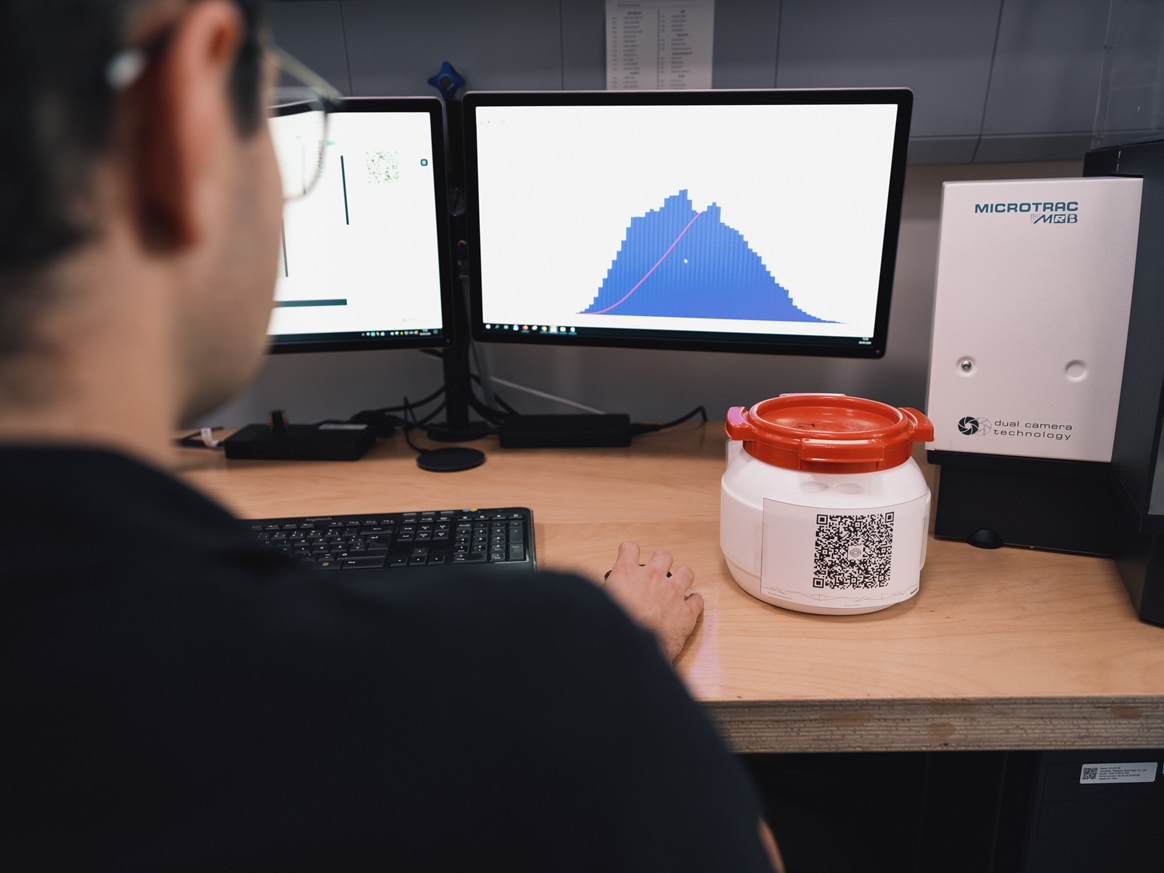
A powder batch arrives with a certificate, and that document matters. But the moment the material enters production, it begins accumulating a history the certificate can never describe.
It may be opened, transferred, exposed to the build environment, recovered, sieved, blended with virgin or previously used material, returned to storage and used again. Each event adds context. By the time powder contributes to a production part, “which batch” is no longer a sufficient quality question.
The more useful question is, what was the condition and history of the material at the moment this part was built? That changes powder management from logistics into quality control.
From identity to state
Traditional inventory logic is excellent at answering where material is, how much is available, and which lot it came from. Industrial AM requires a deeper look. A production-quality system must also preserve genealogy (reuse cycles, blends, sieving events, handling history, measured properties, and the parts or specimens produced from that material state).
Why? Because powder is not merely consumed. It is repeatedly processed. Its relevance to quality therefore sits in the relationship between material history and production outcome.
A tensile result, CT indication, or shift in surface quality becomes more useful when it can be viewed alongside powder state, machine context, and process conditions. That is where traceability stops being documentary and starts becoming analytical.
Beyond the reuse counter
A fixed “discard after X cycles” rule is easy to administer, but cycle count is only one piece of evidence. Two powder populations with the same nominal reuse count may have experienced different blending ratios, exposure, sieving histories, or measured property changes.
A more mature approach is condition-based, preserve those variables, connect them to outcomes, and use the accumulated evidence to support reuse decisions. Condition-based control is not guesswork or an excuse to stretch material life, it depends on defined limits, measured properties, and evidence that can be reviewed consistently.
The objective is not to extend powder life at any cost, it’s to make the decision to reuse, refresh, investigate, or retire material more defensible.
This creates benefits across the organisation. Materials teams gain a richer view of powder behaviour. QA can reconstruct genealogy without detective work. Production can investigate variation faster because material history is already connected to the build and part.
Where the AM quality stack matters
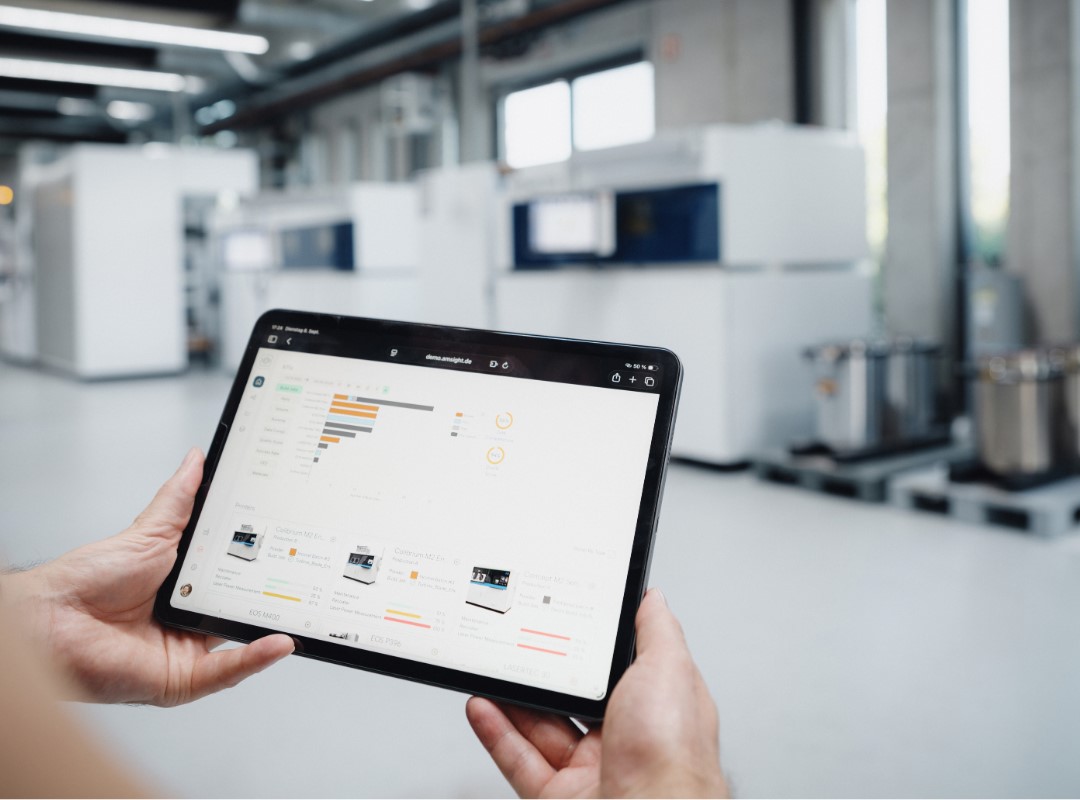
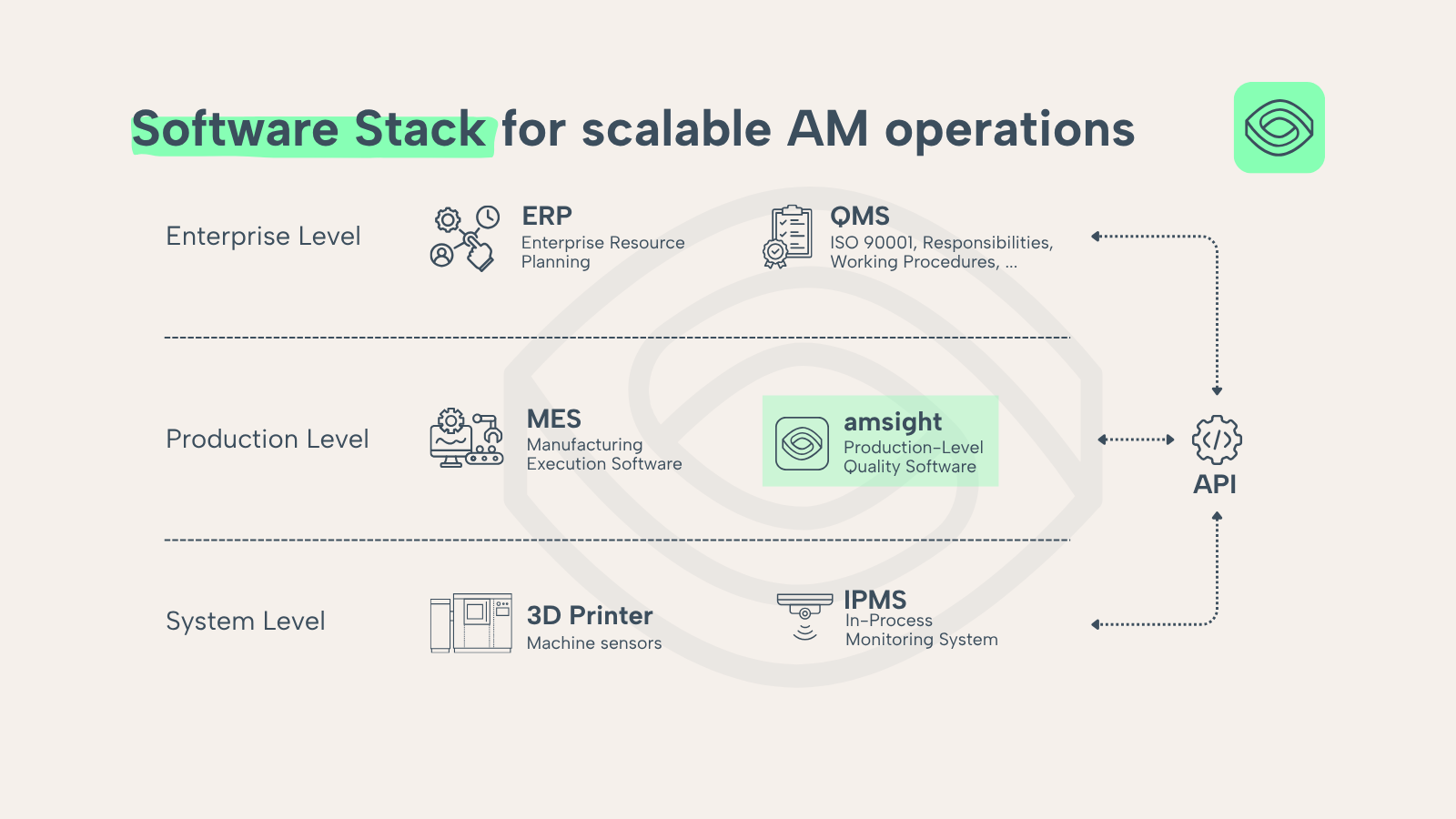
This is also a software-architecture issue. ERP can record that powder was purchased. Warehouse systems can record where it sits. But AM quality needs a system capable of representing what happened to that powder during production and linking that history to process and inspection evidence.
That is the role amsight is designed to fill. QR-based tracking captures batch, blend, and usage events; powder history can be connected with machine, process, post-processing, and inspection information; and this evidence remains available at part level.
The result is a shift in mindset, from proving where powder came from to understanding what it had become by the time it produced the part.
For materials, QA, and production leaders, that is the real destination of digital powder management, not better stock records, but better decisions.
Explore amsight Powder Management and see how powder-to-part history can become an active quality-control asset or check out our whitepaper ‘Mastering Powder Management in AM’.
Related articles
Blog Post
Architecting an Additive Manufacturing Software Stack
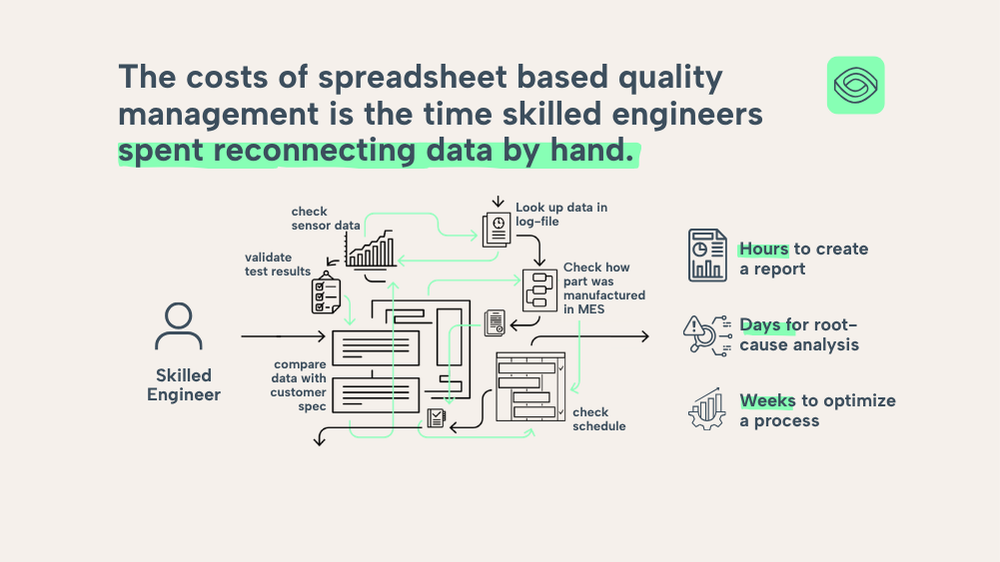
amsight doesn’t replace your MES or ERP - it fills the critical gap between them by owning the AM-specific quality evidence chain, so you stop assembling audit packs from spreadsheets and start proving part-level traceability, SPC, and process stability from powder to final inspection.
Aug 31, 2026
Let's Talk About Your AM Production
Book a call and we'll discuss your process, requirements as we share our findings and walk through why we built amsight.