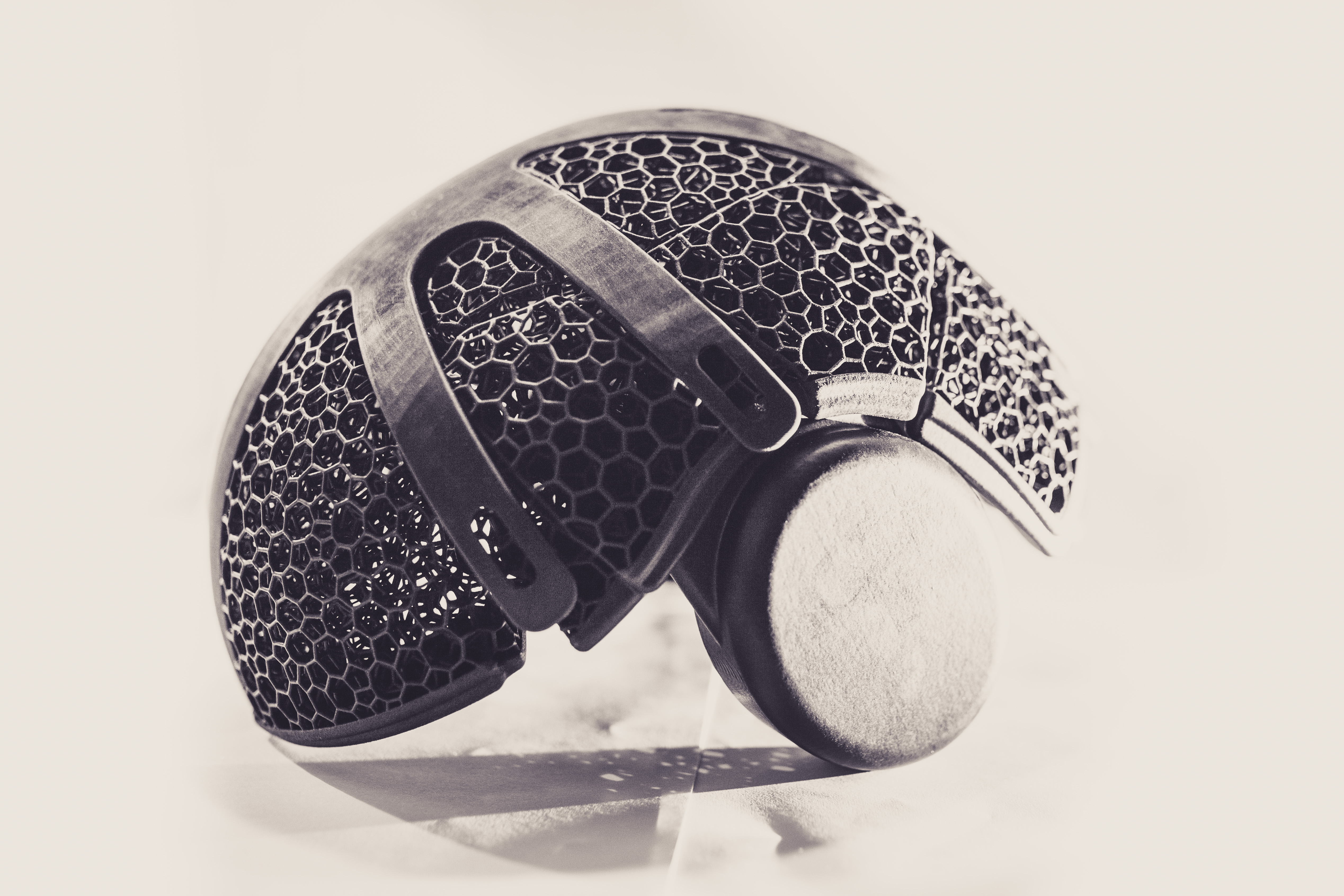
rapid product manufacturing GmbH (rpm) advances the development and production of safety-critical helmet padding using 3D printing - supported by amsight, Farsoon, and Fraunhofer IPA.
Padding Systems for Safety-Critical Applications
EOD helmets are a key component of personal protective equipment for explosive ordnance disposal technicians. In addition to the outer protective shell, the internal padding plays a decisive role in energy absorption, secure fit, and wearer comfort. At the same time, these components are subject to stringent requirements regarding quality, reproducibility, and documentation.
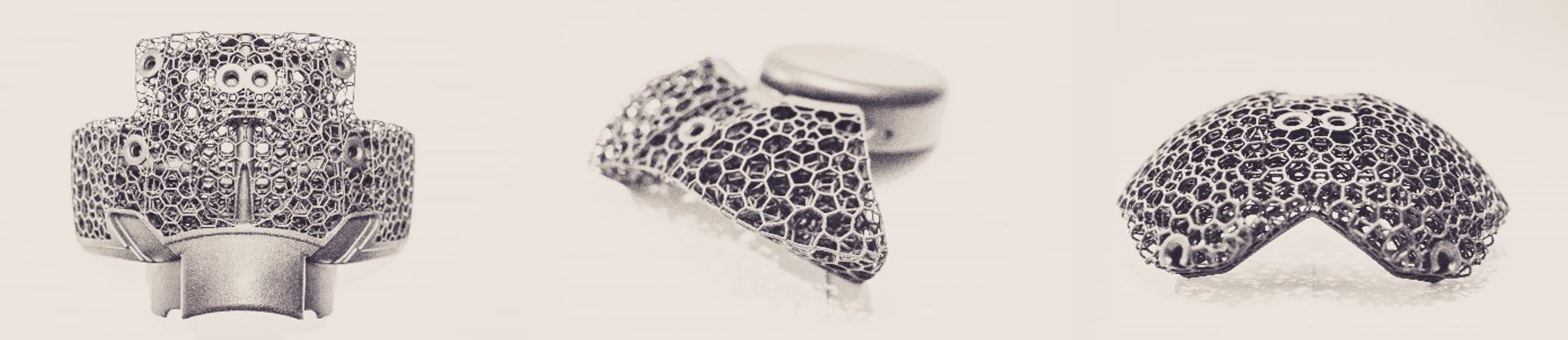
The additively manufactured padding system developed by rpm is based on a lattice structure that replaces conventional foam materials. By specifically designing the lattice geometry, mechanical properties such as stiffness and damping behavior can be locally adapted, allowing different areas of the head to be protected individually. Improved protective performance is achieved while using less material, resulting in reduced weight and enhanced wearing comfort. The open structure also supports ventilation and simplifies cleaning.
Development and Manufacturing by rpm
Additive manufacturing enables rpm to realize padding geometries with defined damping structures and to produce them reproducibly. Design, material selection, and manufacturing parameters were carefully aligned to ensure consistent properties throughout serial production. Development and manufacturing of the padding are fully handled by rpm, while the customer markets the helmets and padding as part of its protective system.
Quality Assurance Through Data-Driven Processes with amsight
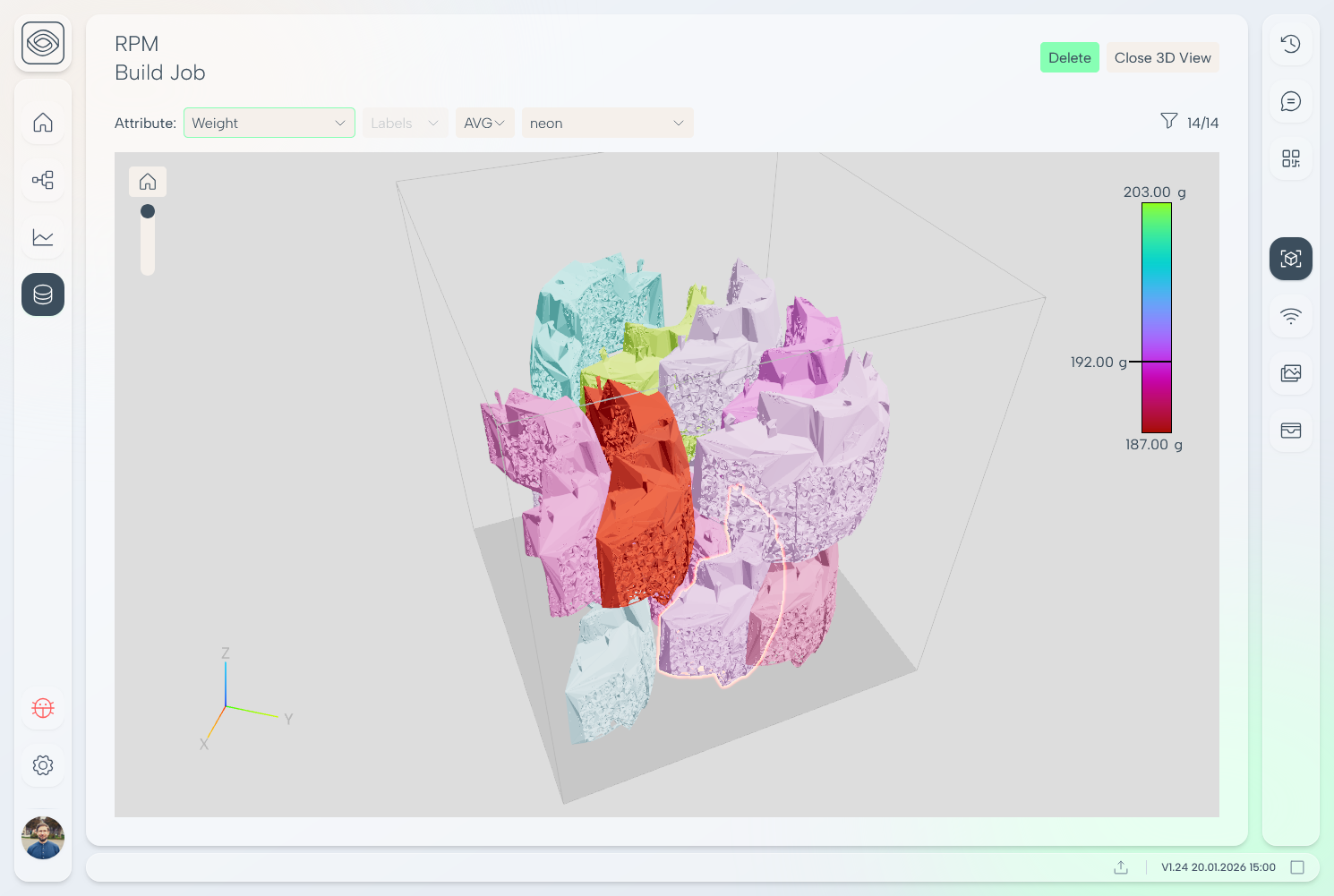
To sustainably ensure high quality standards in the long term, rpm relies on software solutions from amsight as the digital quality backbone of the project. Continuous acquisition and analysis of relevant process and part data across the entire additive manufacturing chain allow deviations from defined target values to be identified at an early stage. This enables proactive intervention in the manufacturing process before quality defects occur.
The resulting data-driven transparency regarding material behavior, process parameters, and component properties makes a significant contribution to process stabilization and ensures reproducible mechanical and functional characteristics of the padding. At the same time, systematic data evaluation — including statistical process control — provides a robust basis for documentation, traceability, and continuous process optimization, all of which are essential prerequisites for consistently high quality in safety-critical applications.
Industrial 3D Printing Technology from Farsoon
The padding components are manufactured on industrial 3D printing systems from Farsoon. These systems provide the process stability and repeatability required for safety-critical applications and enable controlled implementation of the padding geometries developed by rpm. Thanks to their open system architecture and precisely adjustable process parameters, Farsoon systems form the technological foundation for reliable additive serial production. In combination with rpm’s engineering know-how and amsight’s data-driven quality processes, consistent functional properties of the padding are ensured across all production batches.
Scientific Support from Fraunhofer IPA
The validation of manufacturing quality through data-driven processes was scientifically supported by the Fraunhofer Institute for Manufacturing Engineering and Automation IPA.
Fraunhofer IPA specifically assisted rpm in implementing the amsight software for data-driven quality assurance using process and machine data from the Farsoon systems. The focus was on identifying relevant process variables, defining suitable quality metrics, and analyzing manufacturing data to assess process stability and reproducibility.
This support enabled the creation of a transparent and reliable data basis that allows rpm to detect deviations at an early stage, stabilize processes in a targeted manner, and ensure consistently high quality of additively manufactured padding in serial production.
Outlook
“As the development and manufacturing partner of our customer, our focus was on creating a padding system that can be produced reproducibly and reliably meets the required quality characteristics,” says Dr. Jörg Gerken, Technical Managing Director at rpm. “The combination of additive manufacturing and data-driven quality assurance plays a central role in this.”
The approach developed in this project demonstrates how 3D printing, industrial manufacturing technology, and software-based quality assurance can be combined to realize customized components for safety-critical applications, and how a structured, data-driven quality backbone can help make additive manufacturing a dependable production technology for the future.
Related articles

.png)
Blog Post
Architecting an Additive Manufacturing Software Stack
amsight doesn’t replace your MES or ERP - it fills the critical gap between them by owning the AM-specific quality evidence chain, so you stop assembling audit packs from spreadsheets and start proving part-level traceability, SPC, and process stability from powder to final inspection.
Aug 31, 2026
.png)
Let's Talk About Your AM Production
Book a call and we'll discuss your process, requirements as we share our findings and walk through why we built amsight.