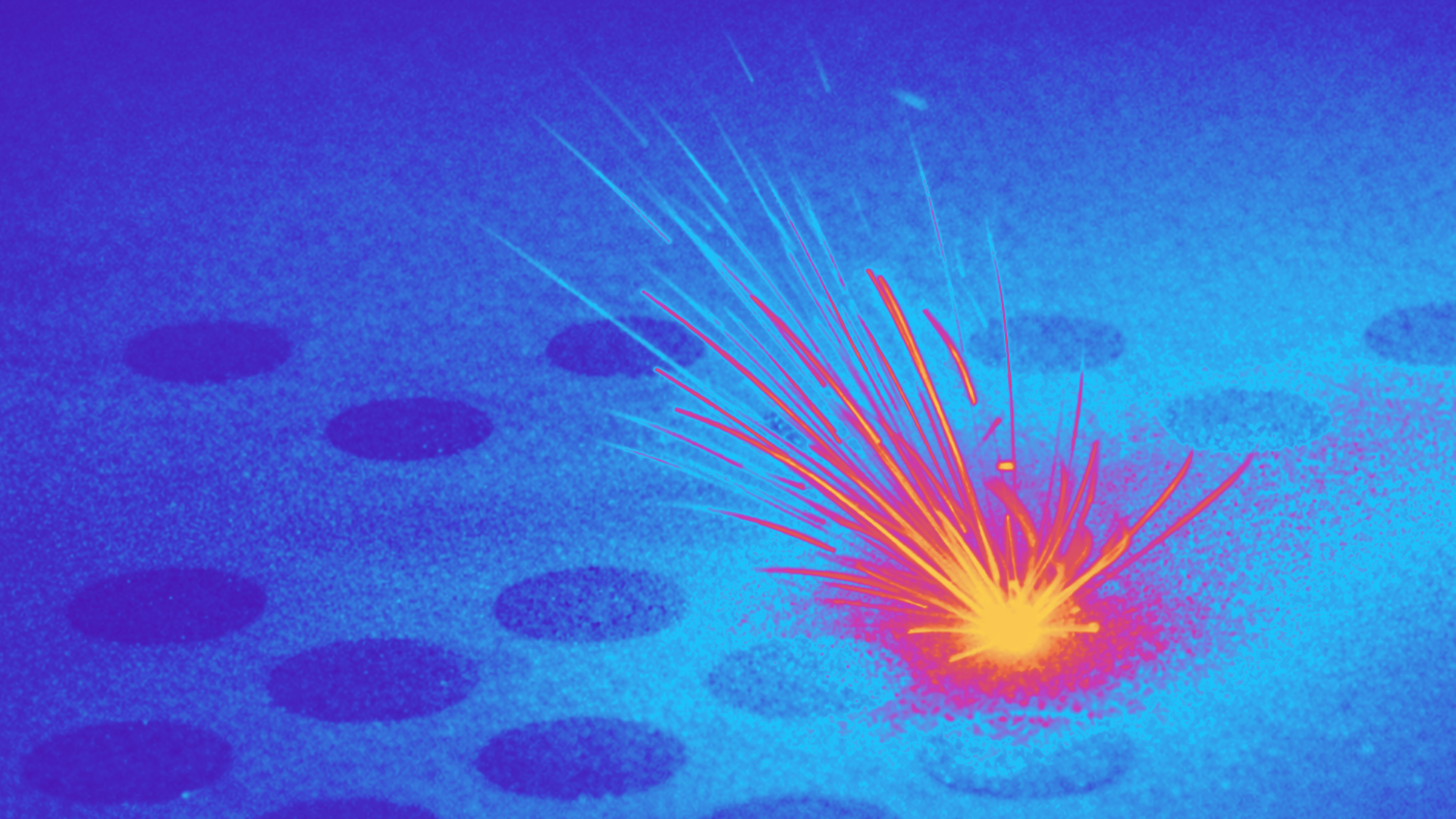
In-Process Monitoring (IPM) is one of the most seductive technologies in additive manufacturing. High-speed imaging, melt-pool signals, thermal maps - it looks like the missing key to quality. If we can “see” the build, surely we can guarantee the part.
And yet, talk to the people actually responsible for quality in production AM and you’ll hear a different story. They’re drowning in data, spending days on investigations, and still relying on spreadsheets because they don’t fully trust the process.
That’s because monitoring is not quality management. It’s one input (and can be a valuable one) but it isn’t the thing that makes your production predictable.
IPM only tells you something about melt-pool emissions and stability of the printing process – but nothing on things influencing quality before or after the printing (e.g. powder properties, heat treatment, surface finishing, etc.). Therefore, it has very limited predictive value for the defects, mechanical properties, or distortion you ultimately care about.
For example, a melt-pool monitoring system may flag an anomaly during a build. But without linking that signal to powder batch history, reuse cycles, parameter sets, and post-processing data, engineers still have to investigate manually to determine whether the part is acceptable or scrap.
Monitoring tells you what happened during printing. Quality management gives you the full picture and controls quality from powder to final part.
Monitoring can show anomalies - but quality management answers the hard questions
A monitoring system can show anomalies during a build. But to manage quality you need to answer harder questions:
- How can you prove conformity to a customer specification without a week of manual reporting?
- Was the production stable across the entire process chain, including post-processing?
- If there is a deviation, how can you decide whether the anomaly is acceptable or if the part must be scrapped?
- Which powder batch, reuse cycle, parameter set, or post-process was used to produce the part?
Those answers don’t live inside a single sensor stream. They live in the connections between powder, process, post-processing, and inspection - the full story of the part.
In-process monitoring data can make AM more complex
Here’s the uncomfortable truth: many teams use monitoring as a substitute for a quality system. The result is a growing pile of signals and dashboards - and an increasing burden on senior engineers to interpret them. It’s the opposite of what production needs.
Industrial quality is not built on heroics. It’s built on repeatable evidence:
- clear specifications and limits
- stable process windows
- trend detection before failures occur
- fast, structured root-cause analysis when something deviates
That’s why Statistical Process Control (SPC) matters. Not as a buzzword but as a discipline. SPC is how mature industries make complex processes manageable. It turns we think it’s okay into we can show it’s stable.
.png)
A digital quality backbone + SPC
The right goal is not more data. The goal is actionable data that makes life easier for QA and production.
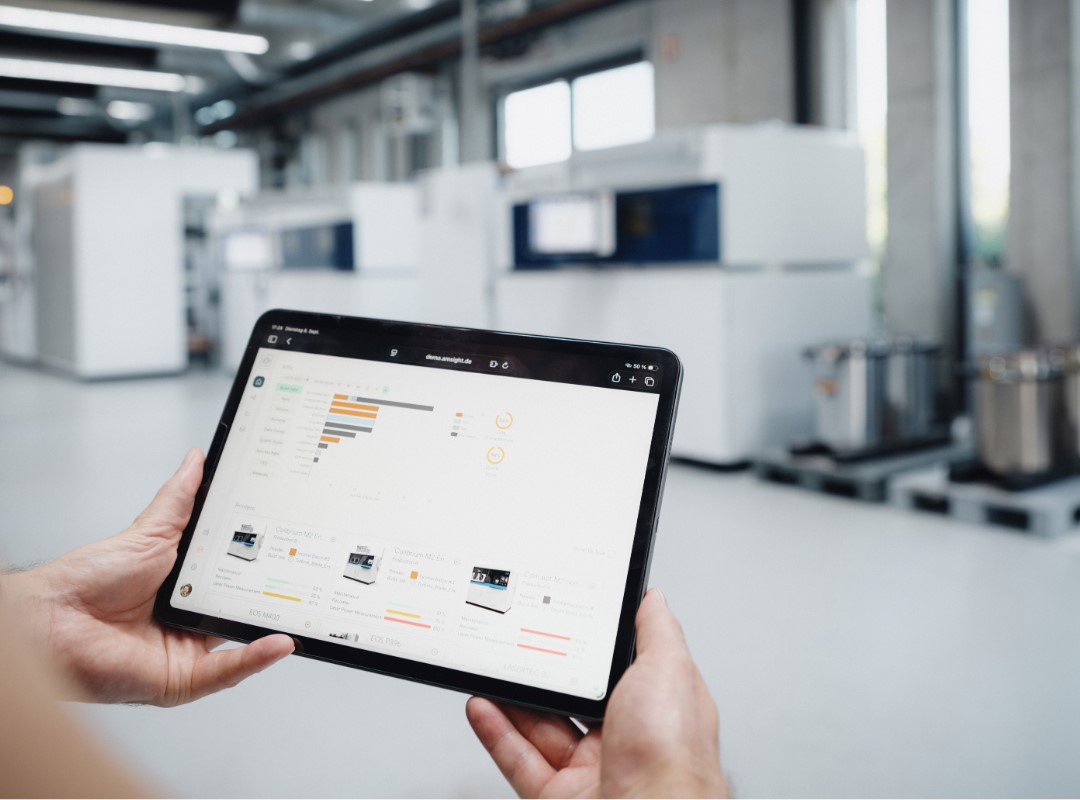
At amsight, our Production Monitoring is built around that principle: fully traceable data from powder to final part, built-in SPC, and root-cause analysis in minutes - so issues are caught before they become scrap.
Our reporting functions address the other half of the problem: stop rebuilding reports by hand. Define templates once and generate them on demand, with analytics (including SPC) built-in.
This is what we mean by a digital quality backbone. Not a monolithic “do-everything” platform, but production-level quality software that connects the data you already have, normalizes it, and makes it usable across the entire fleet.
Monitoring data can plug into that backbone - and when it does, it becomes far more valuable. On its own, it’s just another stream you have to interpret.
A practical test
If you want to see whether your quality strategy is monitoring-heavy but management-light, ask:
- Can we detect drift before parts fail (using SPC, not hindsight?)
- Can we trace a deviation through powder, process and inspection in minutes, not days?
- Can we generate a customer/audit report without a bespoke Excel build?
If the answer is “not yet,” the fix is rarely “add another sensor.” It’s building the quality backbone that turns your data into real process control.
Related articles
.png)
Blog Post
Architecting an Additive Manufacturing Software Stack
amsight doesn’t replace your MES or ERP - it fills the critical gap between them by owning the AM-specific quality evidence chain, so you stop assembling audit packs from spreadsheets and start proving part-level traceability, SPC, and process stability from powder to final inspection.
Aug 31, 2026
.png)
Let's Talk About Your AM Production
Book a call and we'll discuss your process, requirements as we share our findings and walk through why we built amsight.